Defamation damages in the UK: what courts awarded in 42 social media and online libel cases (2019 to 2026)
In England and Wales, the median award for online defamation was £45,000 across 47 awards in the 42 High Court judgments ProofSnap read from 2019 to 2026, each fixing damages for a tweet, post, video, review or online article. Half fell between £25,000 and £75,000, and the highest was £130,000.
Key figures
£45,000median award, 47 awards in 42 judgments
Half of awards between£25,000 and £75,000
Highest£130,000
Defamed online? Preserve the post before it is deleted
By Radim Motycka, founder and lead engineer of ProofSnap, who built its web capture and timestamping system · · 10 min read
1. How much can you claim for defamation in the UK?
We read every High Court judgment on Find Case Law from January 2019 to November 2026 that fixed defamation damages for something published online, and found 42 judgments with 47 awards (method). The average award was about £49,900, above the £45,000 median because five awards reached £100,000 or more. Scotland and Northern Ireland have their own courts and defamation law, so their judgments are not included.
| Award per claimant | Awards | Share |
|---|---|---|
| Nominal (£1) | 1 | 2% |
| £2 to £10,000 | 9 | 19% |
| £10,001 to £49,999 | 14 | 30% |
| £50,000 to £99,999 | 18 | 38% |
| £100,000 and over | 5 | 11% |
Awards by how the case was decided
Defendants who never defended did not get off lighter: the median after a default judgment was £52,500, against £50,000 after a trial. Summary disposal kept all three of its awards at £10,000 or less.
| Procedure | Awards | Median | Range |
|---|---|---|---|
| Trial | 2220 judgments | £50,000 | £1 to £130,000 |
| Default judgment | 1613 judgments | £52,500 | £9,500 to £105,000 |
| Defence struck out or summary judgment, then damages assessed | 55 judgments | £40,000 | £25,000 to £50,000 |
| Summary disposal | 33 judgments | £10,000 | £6,000 to £10,000 |
| Offer of amends accepted | 11 judgment | £8,000 | one award |
Terms used on this page
- Default judgment
- Judgment for the claimant because the defendant did not respond to the claim or file a defence in time. A judge then decides the damages at a hearing.
- Summary disposal
- A faster route in which the judge decides a defamation claim without a full trial. Damages are then capped at £10,000.
- Statement of value
- The amount the claimant writes on the claim form as what the claim is worth. In several judgments here it capped the award.
- Offer of amends
- An offer by the publisher to correct the statement, apologise and pay compensation. If the claimant accepts and the sum is not agreed, the court fixes it.
- Master
- A judge of the High Court's King's Bench Division who mostly deals with procedure. Masters assessed the damages in some of these cases.
2. Preserve the post before it is deleted
Every judgment on this page starts from the same proof: what was published, when, by whom and to how many people. A claim must normally be brought within one year of publication under section 4A of the Limitation Act 1980, and posts are often deleted long before then.
What to keep
- The post itself: the full post, video, review or article with its address (URL), the account name and the date shown.
- Its reach: followers, views, likes, shares and the comments under it. Judges used these figures to estimate the audience.
- The reaction: comments and messages that show the words reached people who know you.
- Every later version: edits, reposts and replies, because a deleted original can leave copies elsewhere.
If the post is about you
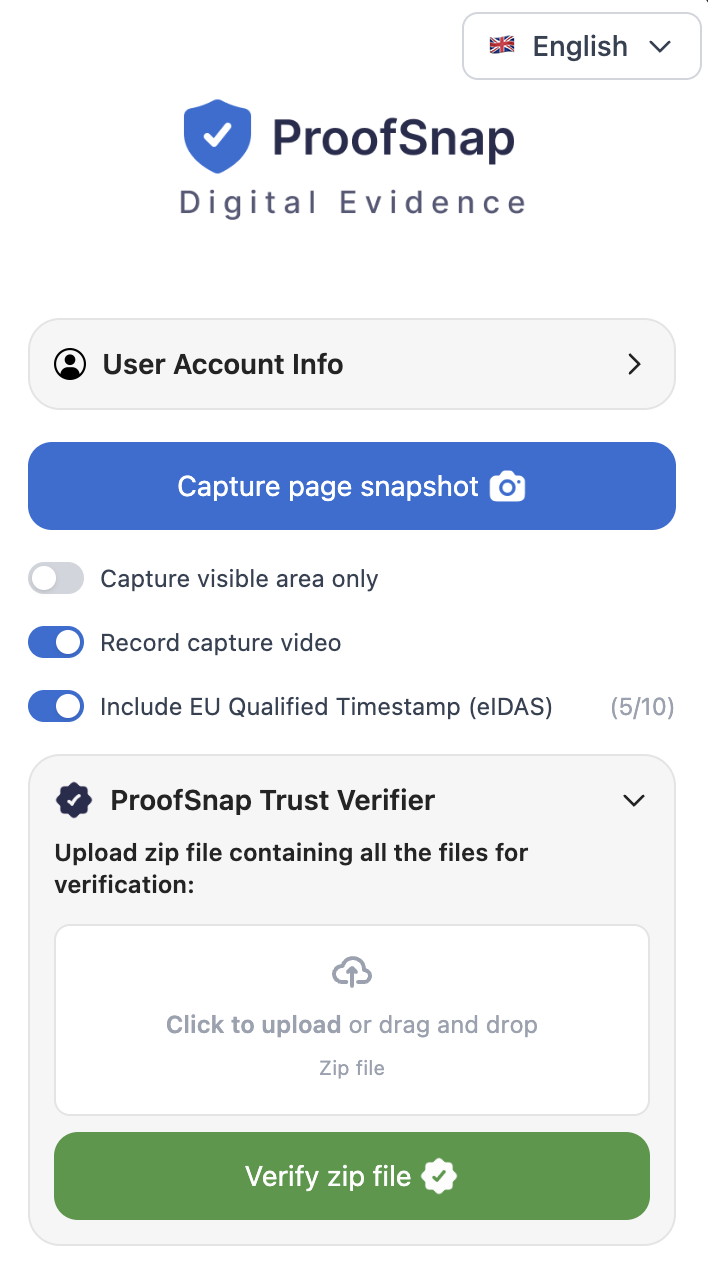
Capture it with the ProofSnap Chrome extension
Open the post in Chrome on your computer and capture it exactly as you see it, with the counts and comments it shows at that moment, even in a group or profile you only see when logged in.
- One click captures the full page and seals it into a signed evidence package.
- Video recording of your browsing up to the post.
- Several tabs in one session, each with its own snapshot.
7-day trial (payment card required) or a SnapPack of 10 captures for $4.99 (approx. £3.72), with no subscription.
Preserve the post in ChromeOn your phone? The extension runs in Chrome on a computer. We can capture the post for you instead, from $44.99 (approx. £33.53), within 48 hours.
We capture the post for you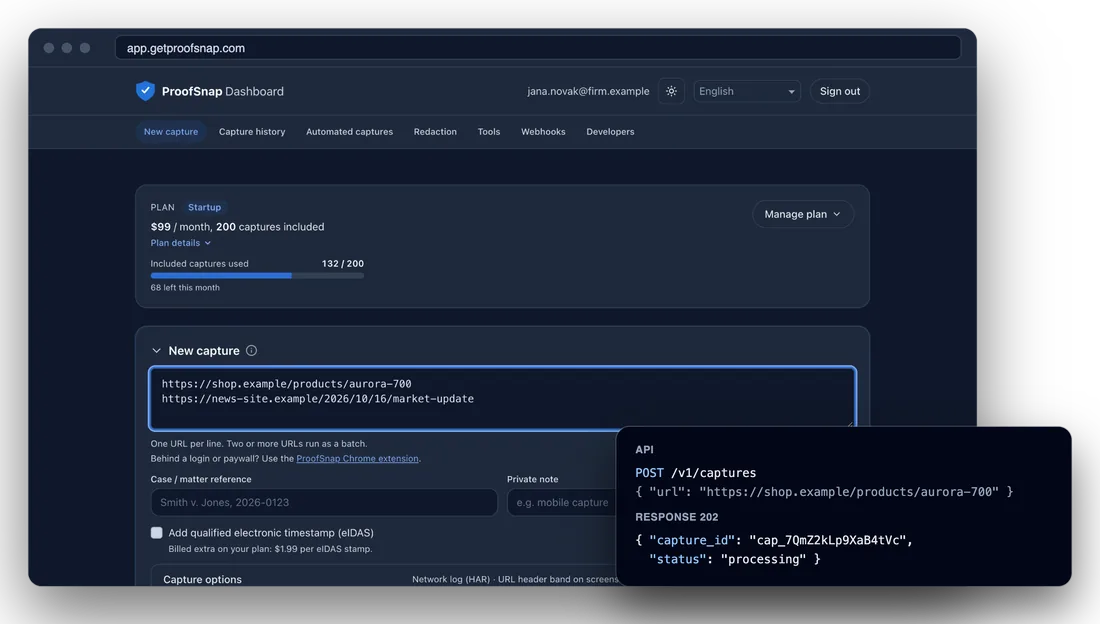
For firms and solicitors
Capture public posts from the dashboard or the API
Capture public posts and profiles once or on a schedule, without a browser, and keep each capture in a matter for the client.
50 free test captures in the sandbox, no card needed. Live plans from $1.49 (approx. £1.11) per capture.
Try 50 free test captures- No time to capture it yourself? Our capture service captures any URL for you, from $44.99 (approx. £33.53), within 48 hours.
- What you receive: a package of 11 to 15 files, including the full-page screenshot, the page HTML and text, an evidence PDF, the metadata and a signed manifest. Anyone can check it in the free Trust Verifier.
3. The 42 judgments, one by one
Each judgment shows the damages per claimant, the platform and the year; open Details for what was published, the award paragraph, serious harm and any injunction or appeal. The case name links to the full judgment.
Filter and sort the judgments
Download all 47 awards (CSV)42 judgments, 47 awards
Median: £45,000
From £1 to £130,000.
This summarises real judgments; it does not predict a case. Each award turns on the words, the reach of the publication and the parties.
| Judgment | Platform | Damages | Serious harm and injunction | What was published |
|---|---|---|---|---|
| Suttle v Walker[2019] EWHC 396 (QB), 18 January 2019 | Facebook, YouTube | £40,000includes aggravated damages; also covers harassmentpara 59 | No defenceInjunction granted | DetailsNine posts on an animal cruelty Facebook page, with videos also on YouTube, accusing a care home manager of abusing her dog. |
| Burgon v News Group Newspapers[2019] EWHC 195 (QB), 6 February 2019 | Online news site | £30,000para 108 | Contested, foundInjunction granted | DetailsArticle on The Sun website saying a Labour MP had joined a heavy metal band that delights in Nazi symbols, read by about 7,000 people. |
| Charakida v Jackson[2019] EWHC 858 (QB), 9 April 2019 | Blog or website | £6,000summary disposal, capped at £10,000para 37 | No defenceInjunction granted | DetailsFormer patient's online blog post titled Worst Liposuction Ever criticising a consultant dermatologist, said to have caused booking cancellations. |
| Fentiman v Marsh[2019] EWHC 2099 (QB), 31 July 2019 | Blog or website, X (Twitter), LinkedIn | £55,000£45,000 plus £10,000 aggravated damages, one award for three postspara 64 | Contested, foundInjunction granted | DetailsThree posts on whistleblower blogs, Twitter and LinkedIn accusing the chief executive of a hygiene company of hacking the defendant and of facing criminal charges. |
| Chandler v O'Connor[2019] EWHC 3181 (QB), 22 November 2019 | X (Twitter) | £10,000summary disposal, capped at £10,000; includes aggravated damagespara 27 | No defenceInjunction granted | DetailsTweets calling a Legatum founder a money-laundering billionaire employed by Russia, and as Putin's operative pushing a hard Brexit. |
| Turley v Unite the Union[2019] EWHC 3547 (QB), 19 December 2019 | Blog or website | £75,000includes aggravated damagespara 184 | Contested, foundNo injunction | DetailsArticle on The Skwawkbox political blog suggesting an MP dishonestly joined a cheap union section for unwaged members to vote in its election. |
| Triad Group v Makar[2020] EWHC 306 (QB), 14 February 2020 | X (Twitter), other sites | £65,000 and £60,000includes aggravated damages; also covers harassmentpara 53 | No defenceInjunction granted | DetailsFormer CEO's long campaign of tweets and investment forum posts accusing two company directors of dishonesty, crime and harming her mother. |
| Ghannouchi v Middle East Online[2020] EWHC 1992 (QB), 23 July 2020 | Online news site | £45,000aggravated damages not pursued in exchange for an undertaking to publish a summarypara 76 | No defenceUndertakings given | DetailsArabic-language article in the online newspaper Middle East Online linking a Tunisian party leader to terrorism and corrupt Qatari funding. |
| Summerfield Browne v Waymouth[2021] EWHC 85 (QB), 18 January 2021 | Online reviewBusiness claimant | £25,000the £25,000 claimed, which the Master found adequatepara 35 | No defenceInjunction granted | DetailsDissatisfied former client's Trustpilot review calling a solicitors' firm a total waste of money and another scam solicitor. |
| Kim v Lee[2021] EWHC 231 (QB), 9 February 2021 | Facebook, Instagram | £44,000includes £4,000 aggravated damagespara 153 | Not contestedInjunction granted | DetailsEight Facebook and Instagram posts by a fellow Korean football reporter making serious accusations against a journalist who is also a church pastor. |
| Glenn v Kline[2021] EWHC 468 (QB), 5 March 2021 | X (Twitter), email | £75,000£65,000 plus £10,000 aggravated damages; a further £25,000 for harassmentpara 95 | No defenceUndertakings given | DetailsTweets and emails by a former Fulham FC figure accusing the former FA chief executive of protecting paedophile rings and covering up racism. |
| Mirza v Farooqui[2021] EWHC 532 (QB), 9 March 2021 | Online news site | £75,000para 19 | No defenceNo injunction | DetailsGulf News website article calling a digital entrepreneur a serial scammer running a Ponzi scheme under police and HMRC investigation. |
| Gale v Scannella[2021] EWHC 1225 (QB), 7 May 2021 | X (Twitter) | £8,000compensation fixed by the court after an accepted offer of amends, net of the discountpara 80 | Not contestedNo injunction | DetailsFour tweets from pseudonymous accounts, tagging 16 organisations, hinting that a football coach had a #MeToo secret and was unsafe with children. |
| Mirza v Ali[2021] EWHC 1494 (QB), 4 June 2021 | Blog or website, Facebook, WhatsApp | £52,500 eachper claimant: £17,500 against the first defendant and £35,000 against the second and thirdpara 42 | No defenceInjunction granted | DetailsSocial media campaign on review websites, Facebook pages and WhatsApp accusing two men linked to a Muslim business programme of fraud. |
| Hijazi v Yaxley-Lennon[2021] EWHC 2008 (QB), 22 July 2021 | £100,000para 163 | Not contestedNo injunction | DetailsTwo Facebook videos accusing a Syrian refugee schoolboy of attacking girls; about 850,000 and 100,000 views (para 31). | |
| Riley v Murray[2021] EWHC 3437 (QB), 20 December 2021 | X (Twitter) | £10,000award stated at para 1 of the appeal judgment | Contested, foundNo injunction | DetailsTweet by a Labour aide alleging that a TV presenter had said Jeremy Corbyn deserved to be violently attacked, and denouncing her for it.Appeal: [2022] EWCA Civ 1146, appeal dismissed |
| Unite the Union v Freitas[2022] EWHC 666 (QB), 23 March 2022 | FacebookOrganisation claimant | £50,000para 20 | Not contestedInjunction granted | DetailsA post on the defendant's own Facebook page and 23 posts in a former BA cabin crew Facebook group accused the union branch of paedophilia and fraud. |
| Al Sadik v Sadik[2022] EWHC 3778 (KB), 31 March 2022 | £50,000includes aggravated damagespara 64 | No defenceInjunction granted | DetailsMessages and a photograph sent by the defendant to a WhatsApp group after a bitter property dispute with her brother-in-law. | |
| Dudley v Phillips[2022] EWHC 930 (QB), 14 April 2022 | Online review, blog or website | £10,000capped at the claimant's statement of value, which the judge said was too low; also covers a data protection claimpara 31 | No defenceInjunction granted | DetailsReviews on pissedconsumer.com accused a wealth management adviser of fraud and incompetence; a separate WordPress site carried sexual allegations. |
| Riley v Sivier[2022] EWHC 2891 (KB), 16 November 2022 | Blog or website | £50,000includes aggravated damagespara 195 | Contested, foundInjunction granted | DetailsA blog article on voxpoliticalonline.com called a television presenter a serial abuser who encouraged online abuse of a 16-year-old girl.Appeal: [2023] EWCA Civ 71, permission to appeal refused |
| Gooderson v Qureshi[2022] EWHC 2977 (KB), 25 November 2022 | Online review | £42,500includes aggravated damagespara 126 | Contested, foundInjunction granted | DetailsTwenty-one hostile reviews under false names on Google Reviews, Yell.com, Allagents and other directories attacked an estate agent after a deposit dispute. |
| Ware v French[2022] EWHC 3030 (KB), 30 November 2022 | Online news site, blog or website | £90,000includes aggravated damagespara 142 | Contested, foundInjunction granted | DetailsAn article on the Coldtype magazine website and in a pamphlet accused a Panorama reporter of rogue, biased journalism against Labour. |
| Wright v McCormack[2022] EWHC 3343 (KB), 21 December 2022 | X (Twitter), YouTube | £1nominal damages: the claimant had advanced a deliberately false case on serious harmaward made in [2022] EWHC 2068 (QB); recounted at para 4 | Contested, foundInjunction refused | DetailsTweets and a YouTube discussion said the claimant was not Satoshi Nakamoto and that his claims to be Satoshi were fraudulent.Appeal: [2023] EWCA Civ 892, £1 award upheld |
| Parkes v Hall and Earnshaw[2023] EWHC 794 (KB), 4 April 2023 | YouTube, other sites, email | £35,000includes aggravated damages; also covers harassment and misuse of private informationpara 57 | No defenceInjunction granted | DetailsYouTube and Brighteon videos and mass emails by a former member made unsubstantiated allegations about the founder of a spiritual group and his private life. |
| Zhurba v Persons Unknown[2023] EWHC 3535 (KB), 12 October 2023 | Blog or website | £10,000 eachcapped at the claimant's statement of value, which the judge said was too low; also covers a data protection claimpara 23 | No defenceInjunction granted | DetailsAn article on the website talk-finance.co.uk accused two men of a multimillion-dollar fraud on US investors. |
| Aaronson v Stones[2023] EWHC 2399 (KB), 13 October 2023 | X (Twitter), YouTube | £110,000includes aggravated damagespara 435 | Contested, foundInjunction granted | DetailsTweets to about 144,000 followers and a YouTube video accused a gay adult-industry entrepreneur of raping several men. |
| Crosbie v Ley[2023] EWHC 2626 (KB), 1 November 2023 | Facebook, online review, other sites, X (Twitter) | £75,000includes aggravated damages; also covers harassmentpara 359 | Contested, foundInjunction granted | DetailsA therapist's GoFundMe page, public Facebook posts and a Google review accused a fellow therapist of cyber fraud and endangering clients. |
| Schofield v Politicalite Ltd[2024] EWHC 543 (KB), 11 March 2024 | Online news site, X (Twitter) | £90,000includes aggravated damages; also covers malicious falsehood and misuse of private informationpara 55 | No defenceInjunction granted | DetailsOnline news article, shared on the publisher's Twitter account, alleging the claimant groomed a young person alongside Phillip Schofield. |
| Wilson v Mendelsohn[2024] EWHC 821 (KB), 10 April 2024 | X (Twitter), Facebook | £30,000£22,500 (also covering misuse of private information) plus £7,500 for a second tweetpara 331 | Contested, foundNo injunction | DetailsTweets republishing a screenshot of a Facebook post portraying the claimant as a weirdo who harassed a mother and photographed children. |
| Blake v Fox[2024] EWHC 956 (KB), 25 April 2024 | X (Twitter) | £45,000 each£90,000 each at trial, halved on appealpara 34 | Contested, foundInjunction granted | DetailsTwo tweets calling the claimants paedophiles, read widely and picked up by national media.Appeal: [2025] EWCA Civ 1321, reduced to £45,000 each (paras 112, 125) |
| Northcott v Hundeyin[2024] EWHC 2704 (KB), 25 October 2024 | Blog or website, X (Twitter) | £95,000includes aggravated damagespara 95 | No defenceInjunction granted | DetailsSubstack article, promoted to over half a million Twitter followers, alleging a BBC filmmaker used his position to obtain sexual favours. |
| Miller v Peake[2025] EWHC 453 (KB), 28 February 2025 | £20,000within the £20,000 claimedpara 244 | Contested, foundNo injunction | DetailsTwelve Facebook posts by a former parish councillor calling the parish clerk a liar and accusing him of dishonesty, incompetence and threatening behaviour. | |
| Ogunkanmi v Chia[2025] EWHC 1404 (KB), 17 June 2025 | Instagram, X (Twitter) | £25,000includes aggravated damages; also covers harassmentpara 95 | No defenceInjunction granted | DetailsInstagram and Twitter posts by a former sexual partner alleging rape and other serious crimes, within a years-long harassment campaign.Appeal: [2026] EWCA Civ 588, claimant's appeal seeking higher damages dismissed |
| Chaudhry v Qureshi[2025] EWHC 1912 (KB), 25 July 2025 | YouTube, Facebook | £130,000 eachincludes aggravated damagespara 152 | Contested, foundInjunction granted | DetailsYouTube and Facebook interview videos by a journalist accusing two Kashmiri politicians of blackmail, sexual assault and corruption. |
| Bukhari v Bukhari[2025] EWHC 2391 (KB), 22 September 2025 | X (Twitter) | £40,000includes aggravated damages; a further £3,000 for harassmentpara 163 | Found for some postsInjunction refused | DetailsTweets and embedded videos by the claimant's cousin accusing a former Pakistani minister of corruption, fraud and intimidation. |
| Naseer v Raja[2025] EWHC 2565 (KB), 9 October 2025 | X (Twitter), Facebook, YouTube | £50,000capped at the claimant's statement of value, which the judge said was too low; includes aggravated damagespara 181 | Contested, foundInjunction granted | DetailsPosts on Twitter, Facebook and YouTube by a former army major turned journalist accusing an ISI brigadier of election manipulation and corruption. |
| Munim v Rahman[2025] EWHC 3051 (KB), 19 November 2025 | £10,000summary disposal, capped at £10,000para 80 | Contested, foundInjunction granted | DetailsFacebook posts by a former business associate alleging that the claimant had stolen an awards logo and trophy design and had stolen his business. | |
| Garrett v Schestowitz[2025] EWHC 3063 (KB), 20 November 2025 | Blog or website | £70,000para 114 | Contested, foundInjunction granted | DetailsTwenty-four articles on two free software websites blaming the claimant for a sockpuppet harassment campaign and alleging Class A drug use. |
| Ali v Hussain[2026] EWHC 112 (KB), 23 January 2026 | TikTok | £50,000includes aggravated damagespara 147 | Contested, foundInjunction granted | DetailsFour TikTok videos accusing a Sheffield leisure centre receptionist of racially abusing the defendant, viewed tens of thousands of times. |
| Rzucek v Vinnicombe[2026] EWHC 946 (KB), 23 April 2026 | YouTube | £40,000includes aggravated damagespara 81 | No defenceInjunction granted | DetailsFive YouTube true-crime videos accusing the brother of a murder victim of dishonest fundraising and harassing the defendant. |
| Mktrchyan v 2Trom Media Group Ltd[2026] EWHC 1923 (KB), 29 July 2026 | Online news site | £105,000includes aggravated damagespara 18 | No defenceInjunction granted | DetailsArticle on The London Post website accusing a businessman of leading an Uzbek corruption and embezzlement network. |
| Conroy v Stojek[2026] EWHC 2429 (KB), 22 September 2026 | Online review | £9,500para 51 | No defenceInjunction refused | DetailsOne-star Google review by a former client calling a Birmingham solicitor a fraudster who rips clients off. |
4. Defamation damages on X (Twitter), Facebook, YouTube and other platforms
X (Twitter) produced the most awards. Online news sites and YouTube produced the highest medians, but those groups are small: a handful of judgments can move a median by tens of thousands of pounds.
| Platform | Judgments | Awards | Median | Range |
|---|---|---|---|---|
| X (Twitter) | 11 | 13 | £45,000 | £1 to £110,000 |
| Blog or website | 8 | 10 | £52,500 | £6,000 to £95,000 |
| 7 | 7 | £44,000 | £10,000 to £100,000 | |
| Online news site | 6 | 6 | £82,500 | £30,000 to £105,000 |
| YouTube | 3 | 4 | £85,000 | £35,000 to £130,000 |
| Online review | 4 | 4 | £17,500 | £9,500 to £42,500 |
| Instagram or TikTok | 2 | 2 | £37,500 | £25,000 to £50,000 |
| 1 | 1 | £50,000 | one award |
Online reviews sit lowest, with a median of £17,500. One of the four review awards was limited to the claimant's own statement of value: in Dudley v Phillips the judge said damages would otherwise have been £30,000 to £40,000. Facebook ranges from £10,000 to £100,000; the top figure is Hijazi v Yaxley-Lennon, two videos posted to an account with over 1 million followers.
By year of judgment
Yearly medians move between £35,000 and £60,000 with no steady rise or fall. Each year holds only three to nine awards, so one large or nominal award shifts its median.
| Year | Judgments | Awards | Median | Highest |
|---|---|---|---|---|
| 2019 | 6 | 6 | £35,000 | £75,000 |
| 2020 | 2 | 3 | £60,000 | £65,000 |
| 2021 | 8 | 9 | £52,500 | £100,000 |
| 2022 | 7 | 7 | £50,000 | £90,000 |
| 2023 | 4 | 5 | £35,000 | £110,000 |
| 2024 | 4 | 5 | £45,000 | £95,000 |
| 2025 | 7 | 8 | £45,000 | £130,000 |
| 2026 (to November) | 4 | 4 | £45,000 | £105,000 |
5. How judges calculate defamation damages
There is no tariff or formula. Each case turns on its facts, but the judgments repeat the same factors that raise or lower the award.
- Serious harm. Under section 1 of the Defamation Act 2013 a statement is not defamatory unless its publication has caused or is likely to cause serious harm to the claimant's reputation; for a body that trades for profit, serious financial loss. In 21 awards the defendant contested serious harm and the claimant still established it; where the defendant took no part, judges often inferred it from the words and the audience.
- How far the words travelled. Almost every judgment records the reach: about 7,000 readers of an article in Burgon v News Group Newspapers (para 108), 144,000 Twitter followers in Aaronson v Stones (para 432) and around 850,000 views of one Facebook video in Hijazi v Yaxley-Lennon (para 31).
- The defendant's conduct. Repeating the allegation, a truth defence maintained to trial without evidence or a failure to apologise led judges to add aggravated damages or to set a higher single award.
- The claimant's own choices. A statement of value on the claim form, or summary disposal, where damages cannot exceed £10,000 under section 9 of the Defamation Act 1996, kept six awards below what the judge said the case deserved.
- The claimant's own conduct. In Riley v Murray the award was reduced to reflect the claimant's own provocative earlier tweet; in Wright v McCormack it fell to £1 because the claimant advanced a deliberately false case on serious harm.
- An appeal. In Blake v Fox the Court of Appeal found £90,000 per claimant for two tweets too high and cut each award to £45,000.
Injunctions and publishing the judgment. An injunction to stop repetition was granted in 30 of the 42 judgments, and in 12 the defendant was ordered, or undertook, to publish a summary of the judgment, often on the same account that carried the original post.
Anonymous publishers. A claim can be brought against people who cannot be named: in Zhurba v Persons Unknown each claimant was awarded £10,000 against the unknown people who put an article on a website.
6. What it costs and what happens first
Before you issue a claim, the Pre-action Protocol for Media and Communications Claims expects you to write to the publisher with a letter of claim. It identifies the publication and the words, says what they mean and why they are wrong, and explains how they caused or are likely to cause serious harm; where possible, enclose a copy.
The publisher should reply in full as soon as reasonably possible and, if it cannot do so within 14 days, say when it will. The court expects both sides to consider settling, for example through mediation, and refusing to engage can lead to an order to pay additional costs. How closely each side followed the protocol also counts when the court decides costs. The judgments in this study record the damages, not what the claims cost, so ask a solicitor for an estimate before you start.
7. Frequently asked questions
What is the average payout for defamation of character in the UK?
There is no tariff. Across 47 awards in 42 online defamation judgments from 2019 to 2026, the average was about £49,900 and the median £45,000, with half between £25,000 and £75,000. The highest was £130,000 to each of two politicians in Chaudhry v Qureshi [2025] EWHC 1912 (KB).
How much are damages for a defamatory tweet or Facebook post?
Thirteen awards concerned X (Twitter), with a median of £45,000, from a nominal £1 in Wright v McCormack to £110,000 in Aaronson v Stones. Seven concerned Facebook, with a median of £44,000, from £10,000 to £100,000 in Hijazi v Yaxley-Lennon.
What can I do if someone defames me on social media?
Preserve the post first, with its URL, account, date and reach. Then write to the publisher with a letter of claim, as the Pre-action Protocol expects; the claim itself must normally be brought within one year of publication. In this study, 30 of the 42 judgments also granted an injunction, and a claim can be brought even against persons unknown.
How long do I have to sue for defamation?
Normally within one year of publication; the court can allow a later claim only if that would be equitable. Posts are often deleted much sooner, so preserve the publication as soon as you see it.
Can a business sue for defamation over an online review?
Yes, but a body that trades for profit must show serious financial loss. Only two of the 42 judgments made an award to an organisation: £25,000 to a solicitors' firm over a Trustpilot review and £50,000 to a trade union over Facebook posts.
Why were some awards exactly £10,000?
Five of the six awards of exactly £10,000 sat at a ceiling, either the £10,000 limit in summary disposal or the claimant's own statement of value, and in each the judge said a full assessment would have produced more. The sixth, Riley v Murray, was fixed at £10,000 after a trial.
What is a good settlement for defamation of character?
Settlement sums are rarely made public, so the closest public benchmark is what judges award when a claim reaches judgment: in this study a median of £45,000, with half between £25,000 and £75,000, and an injunction in 30 of the 42 judgments. Weigh any offer with a solicitor against the evidence you hold.
Keep a sealed copy of the post for your letter of claim
The letter of claim identifies the publication and the words, and encloses a copy where possible. Capture the post with its URL, date and reach while it is still online: you receive 11 to 15 files with a signed manifest, and anyone can check them in the free Trust Verifier.
7-day trial (payment card required) or 10 captures for $4.99 (approx. £3.72).
From $44.99 (approx. £33.53), within 48 hours.
Solicitor? Capture public posts for each matter from the dashboard or the API, with 50 free test captures in the sandbox.
8. Method, limits and data
Sources. On 9 and 10 November 2026 we searched Find Case Law, the National Archives service that publishes court judgments, for King's Bench (formerly Queen's Bench) Division judgments from 1 January 2019 that mention defamation or libel together with damages and an online platform, and for Court of Appeal judgments on the same claims. We downloaded about 800 judgments and read every one that fixed damages. One judgment, Hijazi v Yaxley-Lennon, is not on Find Case Law; we read the copy published by the judiciary on judiciary.uk. Every sum, paragraph number and reach figure on this page comes from the judgment text.
What counts. A judgment is included when a High Court judge, a deputy High Court judge or a Master in England and Wales fixed a sum of damages for defamation and at least one publication sued on was online. One row, Gale v Scannella, is compensation fixed by the court after the defendant made an offer of amends that the claimant accepted. We excluded judgments on meaning, strike-out, jurisdiction or costs, and judgments in privacy-only or unsuccessful claims. We left out two awards where a print edition carried most of the readership: a Sunday Mirror article (Gilham v MGN) and a magazine article whose website version the judge found had no significant readership (Bates v Rubython).
How we count. One row per judgment, one award per claimant. The figure is general damages for defamation, including aggravated damages. Where the judge gave one sum that also covers harassment or privacy, we use that sum and say so in the table; separate sums for harassment are not added. Where an appeal changed the figure, the statistics use the final figure.
Limits. Not every defamation claim ends in a published judgment: many settle, and settlement sums are rarely public. Judgments where the defendant did not take part are common in this set. The medians describe these 42 judgments and are not a prediction for any case.
Data. The CSV file with all 47 awards, with the citation, date, judge, platforms, claimant type, damages, serious harm, injunction, appeal, award paragraph, a quotation of the award and the judgment URL, is published under CC BY 4.0. Cite ‘ProofSnap, Defamation damages in the UK, 2026’ with a link to this page.
Related reading
Sources
- Defamation Act 2013, section 1 (legislation.gov.uk)
- Defamation Act 1996, section 9 (legislation.gov.uk)
- Limitation Act 1980, section 4A (legislation.gov.uk)
- Find Case Law, The National Archives
- Pre-action Protocol for Media and Communications Claims (justice.gov.uk)
- Each of the 42 judgments is linked from its row in the table and listed with its URL in the CSV file.